An Extensive Introduction of the Background and Development of Metal Casting Practices
Metal casting has actually played a critical function in shaping human world. Its beginnings map back to old artisans that crafted tools and accessories from liquified steels. With time, methods developed together with social influences, leading to substantial advancements. The Industrial Change noted a turning factor, presenting mechanization and new approaches. Today, the industry is discovering sustainable methods and ingenious modern technologies. Understanding this development reveals not just the creativity however additionally the effect of metal casting on modern-day culture.
The Origins of Steel Spreading: Ancient Strategies and Materials
The practice of steel spreading traces its origins to old civilizations, where very early craftsmens took advantage of the homes of liquified metals to produce tools and attractive products. These craftsmens mainly made use of copper and gold as a result of their malleability and reduced melting factors, utilizing strategies such as sand casting and lost-wax spreading. Sand spreading involved forming a mold and mildew from sand, while lost-wax casting permitted intricate layouts by creating a wax version that thawed away during the procedure. The ability to cast steels transformed manufacturing, making it possible for the creation of more long lasting and efficient devices contrasted to their stone predecessors. As knowledge spread, numerous societies adapted these methods, adding to the advancement of metalworking. The emergence of metal casting marked a considerable landmark in human background, helping with innovations in war, agriculture, and virtuosity, inevitably preparing for future developments in metallurgy and production processes.
The Advancement of Bronze and Iron Casting
Advancements in metal spreading strategies resulted in the development of bronze and iron spreading, noting a substantial advancement in product use and technology. Bronze, an alloy of copper and tin, arised around 3500 BCE, offering improved sturdiness and resistance contrasted to its precursors. This advancement allowed craftsmens to develop intricate tools, weapons, and attractive products, which added to the increase of complicated societies.
Iron casting followed, gaining prominence around 1200 BCE. The intro of actors iron, generated by thawing iron and pouring it into mold and mildews, revolutionized different markets. This product was stronger and much more bountiful than bronze, promoting mass manufacturing of devices and weaponry. The capability to cast iron enabled the building of bigger, a lot more sturdy structures, inevitably changing both agricultural and army practices. Jointly, the developments in bronze and iron casting not just innovative technological capacities but additionally laid the foundation for future metallurgical technologies.
The Influence of Society and Art on Casting Practices
Social meaning plays a substantial duty in steel spreading, affecting the design and function of cast things across different cultures. Creative methods and designs have actually advanced, reflecting the values and visual appeals of numerous cultures throughout history. This intersection of society and virtuosity not only forms the physical qualities of cast items however also imbues them with much deeper definition and importance.
Cultural Meaning in Casting
Throughout history, steel spreading has actually served as a canvas for social expression, showing the worths, ideas, and appearances of varied societies. Each society imbues its actors metal items with specific symbolism, typically conveying themes associated to power, spirituality, and identity. As an example, ancient worlds used casting strategies to produce deities and ceremonial artefacts, personifying their religious convictions. In comparison, middle ages European artisans generated detailed metalwork that symbolized condition and wide range. In addition, indigenous teams used steel casting to create things that represented their connection to nature and area. Therefore, the steel casting process goes beyond mere capability, coming to be a necessary tool with which social narratives and heritage are celebrated and preserved across generations.
Artistic Methods and Styles
Creativity in metal casting has actually evolved greatly in time, shaped by the social contexts and artistic motions of different cultures. From old human beings to contemporary art forms, strategies have actually differed commonly, affected by religions, social structures, and technological developments. The complex styles of bronze sculptures in old Greece showed not just technical ability but also thoughtful ideals of appeal. In contrast, African metal casting frequently highlighted useful items, combining artistry with energy. The surge of modern art presented abstract forms, enabling musicians to check out brand-new materials and ingenious casting approaches. Today, artists proceed to attract upon historic designs while integrating contemporary impacts, leading to varied expressions that honor practice while pressing the limits of creativity in steel casting.
The Industrial Transformation: Changing Metal Casting
The Industrial Transformation marked an essential shift in steel spreading methods through substantial advancements in casting strategies. The increase of automation made it possible for faster and much more reliable production procedures, substantially raising production volume. This transformation not only boosted the abilities of steel casting yet also established the stage for modern-day industrial practices.
Innovations in Casting Techniques
Technologies during the Industrial Change dramatically transformed steel spreading techniques, leading the way for greater effectiveness and accuracy. Key innovations included the intro of the cupola furnace, which allowed for continual melting of iron, considerably enhancing production rates. The advancement of sand casting techniques enhanced the quality and consistency of cast items, while using patterns made from steel even more enhanced accuracy. Furthermore, the incorporation of enhanced ingredients and alloys caused more powerful and a lot more durable spreadings. The shift from artisanal techniques to extra systematic approaches marked a considerable change, making it possible for suppliers to meet the climbing needs of automation. These innovations not just enhanced procedures however also expanded the applications of metal casting across numerous markets.
Rise of Automation
As automation held throughout the Industrial Transformation, metal spreading experienced a profound makeover that revolutionized production methods. The intro of steam power and mechanized devices structured procedures, allowing for a lot more consistent and effective manufacturing. Traditional handcrafting strategies gave method to machine-driven procedures, which minimized labor expenses and reduced mistakes. Technologies such as the molding device and automatic pouring systems greatly improved the rate and precision of spreading. Furthermore, using standard mold and mildews promoted a consistent outcome, more boosting the top quality of actors items (Metal Foundry). This shift not only boosted the ability for large-scale production however additionally laid the groundwork for modern-day manufacturing methods, placing mechanization as a cornerstone of the progressing metal spreading market
Effect On Manufacturing Quantity
Industrial developments during the Industrial Revolution substantially raised production quantity in steel casting. The intro of heavy steam power and mechanical procedures enabled for faster and a lot more efficient melting and molding of metals. Factories started taking on assembly line techniques, which streamlined manufacturing and decreased labor prices. Advancements in heater layout and the usage of iron and steel enhanced the top quality and toughness of cast products, satisfying growing commercial demands. Additionally, the rise of transportation networks facilitated the distribution of cast items, additionally boosting manufacturing. These growths not only broadened the range of metal spreading procedures but additionally diversified the variety of applications, placing steel casting as an essential part of industrial growth during this transformative age.
Modern Spreading Methods: From Sand to Financial investment
While traditional approaches of steel casting have served the industry for centuries, modern spreading techniques have actually developed significantly, offering enhanced precision and performance. Contemporary methods include sand casting, financial investment spreading, die spreading, and lost foam casting, each customized to particular applications and products.
Sand casting continues to be preferred due to its versatility and cost-effectiveness, suitable for large-scale production. Financial investment spreading, understood for its capacity to create complex layouts, makes use of a wax pattern covered with ceramic, enabling high dimensional accuracy. Pass away casting, frequently employed for non-ferrous metals, provides quick production prices and premium surface coatings, making it excellent for mass manufacturing.
Lost foam spreading uses an one-of-a-kind method by utilizing a foam pattern that vaporizes throughout the putting process, enabling complicated forms without the need for added cores. Jointly, these modern-day casting methods mirror the industry's dedication to enhancing high quality, minimizing waste, and enhancing manufacturing capacities.
Innovations in Materials and Technologies
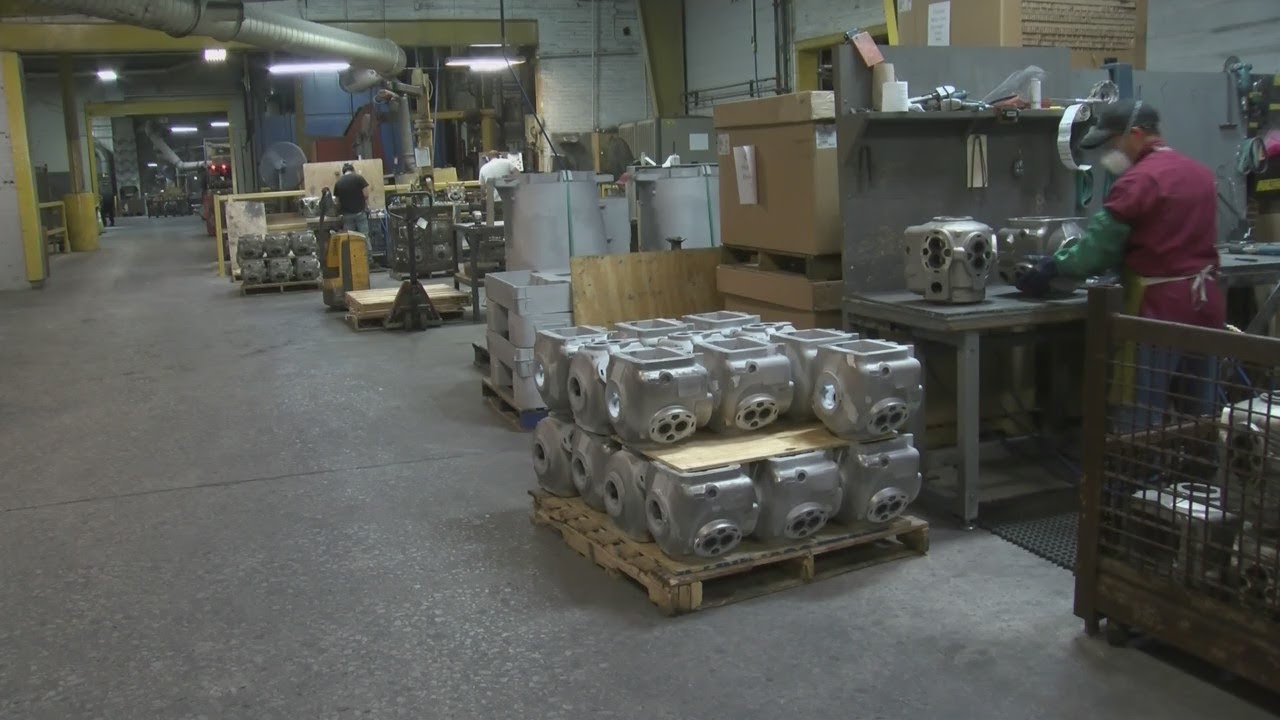
In addition, the introduction of 3D printing innovation has transformed mold-making processes, allowing for rapid prototyping and minimized lead times. This innovation helps with the production of detailed designs that would certainly be tough or impossible to attain with traditional techniques.
Moreover, computer simulations and modeling have actually come to be important tools, enabling designers to anticipate casting flaws and maximize layouts prior to manufacturing. Such developments lessen material waste and increase effectiveness, representing a considerable leap onward in metal casting practices. Overall, these improvements have redefined the capabilities of the market, driving it toward greater accuracy and effectiveness.
The Future of Metal Spreading: Sustainability and Innovations
As the metal casting industry looks towards the future, sustainability and technical improvements are poised to play critical roles in forming its evolution. Raising pressure to reduce carbon footprints has actually resulted in the fostering of environment-friendly techniques, such as reusing scrap steel and making use of eco-friendly power resources website in manufacturing procedures. Advancements in products science are additionally transforming the landscape, with the growth of lighter, stronger alloys that boost item performance while decreasing waste.
Advancements in automation and digital innovations, consisting of 3D printing and artificial knowledge, are simplifying operations, reducing expenses, and improving precision. These innovations allow more efficient layouts and faster prototyping, assisting in personalized remedies for diverse industries. As the field embraces these modifications, it will not just improve functional effectiveness however additionally add to a more lasting future, straightening with global ecological objectives and consumer needs for liable manufacturing methods. The future of metal casting is subsequently set to be both cutting-edge and diligent.
Regularly Asked Questions
What Are the Ecological Impacts of Metal Casting Practices?
Exactly How Do Casting Flaws Affect Product Quality and Security?
Casting flaws greatly endanger item high quality and safety by introducing structural weak points, causing possible failings under stress. These problems can lead to expensive recalls, decreased performance, and raised liability for manufacturers otherwise addressed correctly.
What Certifications Are Needed for an Occupation in Metal Casting?
An occupation in steel casting typically calls for a high school diploma, technological training in metallurgy or design, and experience in making procedures. Certifications in safety and quality assurance further boost work leads in this field.
Exactly How Does Steel Casting Contribute to Modern Manufacturing Processes?
Metal spreading noticeably enhances modern production by enabling the creation of complicated shapes, lowering product waste, and permitting mass manufacturing (Metal Casting). Its versatility and performance enhance procedures throughout different sectors, driving development and financial growth
What Are the Prices Related To Steel Spreading Operations?
The prices related to steel spreading procedures consist of raw products, labor, power intake, devices maintenance, and waste monitoring. These expenditures can vary substantially based upon the complexity of the casting procedure and production quantity.
The technique of metal spreading traces its roots to ancient human beings, where early craftsmens utilized the residential properties of liquified metals to develop devices and decorative things. These craftsmens mainly made use of copper and gold due to their pliability and reduced melting factors, employing techniques such as sand spreading and lost-wax casting. Sand casting involved forming a mold and mildew from sand, while lost-wax casting permitted for complex designs by creating a wax design that thawed away during the procedure. Innovations in steel casting techniques led to the advancement of bronze and iron spreading, noting a substantial evolution in material use and technology. While traditional methods of steel spreading have served the market for centuries, contemporary spreading methods have actually progressed substantially, offering boosted precision and performance.